Category: News

Category for generic news and updates that aren’t associated with one particular product brand.

  • APG INTRODUCES THE NEW SERIES FS-400 AND FS-410 STAINLESS STEEL VERTICAL FLOAT SWITCHES

    APG INTRODUCES THE NEW SERIES FS-400 AND FS-410 STAINLESS STEEL VERTICAL FLOAT SWITCHES

    APG's New Series FS-400 and FS-410 Stainless Steel Vertical Float Switches

    LOGAN, UT – Automation Products Group, Inc. (APG) introduces two new float switches, the Series FS-400 Stainless Steel Vertical Float Switch, and the Series FS-410 Miniature Stainless Steel Vertical Float Switch.

    The Series FS-400 and FS-410 are versatile switches, compatible with a wide range of liquids, temperatures, and pressures. They feature all stainless steel wetted materials, user-reversible logic function, and high operating temperature ranges. With max capacities of 60 W and 30 W respectively, the FS-400 and FS-410 can both handle up to 120 VDC or 240 VAC. Installation is simple with NPT mounting and a hex nut. The Series FS-400 Stainless Steel Vertical Float Switch and Series FS-410 Miniature Stainless Steel Vertical Float Switch offer set-and-forget ease of use in all the places you need them.

    Features of the Series FS-400 include:

    • 316L and 15-7 Stainless Steel wetted materials
    • Mounting: 1/4” NPT with 5/8” Hex nut
    • 3.44” (87.49 mm) from top of threads to end of stem
    • 2.06” Ø float
    • Standard Temperature Range: -40° – 383° F (-40° – 195° C), up to 200 psi
    • High Temperature Range: -40° – 500° F (-40° – 260° C), up to 500 psi
    • Max Capacity: 60 W
    • Voltage rating: up to 120 VDC, 240 VAC
    • Certifications pending

    Features of the Series FS-410 include:

    • 316L and 15-7 Stainless Steel wetted materials
    • Mounting: 1/8” NPT with 1/2” Hex nut
    • 2.32” (58.93 mm) from top of threads to end of stem
    • 1.17” Ø float
    • Standard Temperature Range: -40° – 383° F (-40° – 195° C), up to 300 psi
    • High Temperature Range: -40° – 500° F (-40° – 260° C), up to 300 psi
    • Max Capacity: 30 W
    • Voltage rating: up to 120 VDC, 240 VAC
    • Certifications pending

    About Automation Products Group
    Automation Products Group, Inc. (APG) is a supplier of innovative and differentiated products, solutions, and services for industrial process measurement and control. Technologies include pressure, flow, level control, analytics, and dedicated flexible control, using state of the art methodologies. Our customers include OEM’s, integrators, distributors and end users. APG’s goal is to provide reliable products and solutions supported with exceptional customer service.

    Media Contact: APG Sales, sales@apgsensors.com, 1-888-525-7300

  • Nidec Industrial Solutions new $12 million facility in CLEVELAND supports essential industries during the COVID-19 crisis and  paves a path for future growth

    Nidec Industrial Solutions new $12 million facility in CLEVELAND supports essential industries during the COVID-19 crisis and paves a path for future growth

    Cleveland, OH, August 10, 2020 – Nidec Industrial Solutions (NIS), the industrial platform of Nidec Group, expands in the USA thanks to the opening of its new facility in Cleveland, OH. This new facility has been able to support essential industries during the COVID-19 crisis and paves the path for future growth in North America.
    The 12-million-dollar investment in this new building comprises 67,000 square feet of office and manufacturing space. The facility is a three-tier building and brings together 130 employees previously housed in 3 separate facilities.
    The facility was occupied in March and has continued to engineer and manufacture at full-capacity throughout the Covid-19 pandemic. The site is classified as an essential manufacturing facility because NIS manufactures both its leading Nidec Avtron™ Encoders and large-scale controls and automation systems here for Renewables & Energy Storage, Oil & Gas, Steel, PPE production, healthcare equipment, US Defense installations, Port & Specialty Cranes as well as Pulp & Paper machinery.

  • ASi-5/ASi-3 gateways – advantageous even without ASi-5 slaves

    ASi-5/ASi-3 gateways – advantageous even without ASi-5 slaves

    The current ASi-5/ASi-3 gateways by Bihl+Wiedemann are also the most powerful ASi-3 masters – because the integrated ASi-3 master “profits” from numerous novel features. We were able to implement many improvements also thanks to close cooperation with our ASi-5 pioneer customers. In the new gateway generation, you will probably already find the legitimate successor device.

    Advantages of ASi-5/ASi-3 gateways
    Even without the use of ASi-5 slaves, there is much to be said for the new gateway generation:
    • Field update capability for tamper-proof firmware and security updates
    • Integrated OPC UA server for Industry 4.0 applications
    • Integrated web server for fast system diagnostics
    • Cyber security measures through rigorous testing & end-to-end encryption
    • Extra functions, e.g. a real-time clock to capture diagnostic buffer entries

    Devices with integrated safety monitor also have additional features, such as safe operating mode selection PLe or Safe Link via multicast and broadcast.

    [Translate to Englisch:] 4019_3862

    Fig.: Two all-rounders from the new gateway generation – BWU3862 (left) and BWU4019 (right)

    Many variants available
    Bihl+Wiedemann ASi-5/ASi-3 gateways are now available as single or double masters for nearly all common fieldbus systems (e.g. PROFINET, EtherCAT, EtherNet/IP). They are optionally also available with integrated safety monitor and for safe fieldbus protocols (e.g. PROFIsafe, CIP Safety, FSoE). You can replace your existing ASi-3 gateways with little configuration effort.

    You can find your most-suitable successor device or the matching ASi-5/ASi-3 gateway in our Product selector.

  • Opto22: New White Paper: Building Industrial IoT from Edge to Cloud

    Opto22: New White Paper: Building Industrial IoT from Edge to Cloud

    Read Article on Opto22’s site

    See how next-generation edge-based distributed I/O and controllers open new possibilities for connected infrastructure.

    In the field of industrial automation, terms like digital transformation, the industrial internet of things (IIoT), or edge computing have become common topics of discussion. Today’s businesses have IoT goals. End users need devices and applications to share data seamlessly across machines, sites, and the enterprise so they can optimize production and reduce costs. How do we achieve these goals?

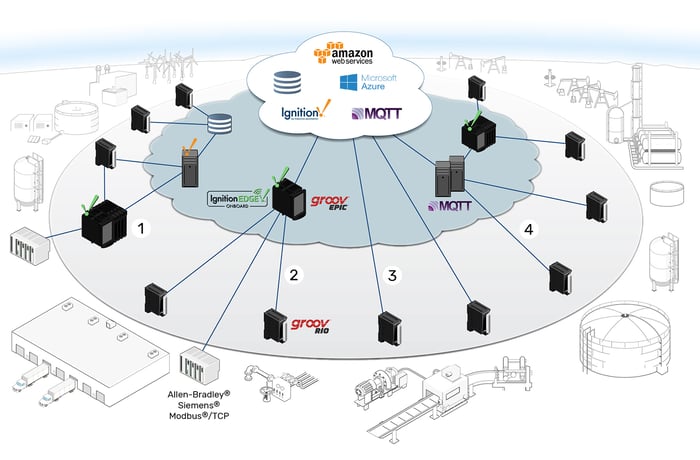
    Opto 22’s new white paper, Building Industrial IoT from Edge to Cloud, discusses how a more distributed global architecture is enabling connectivity from the field to the cloud for sensors and actuators, and for the input/output (I/O) systems and controllers linked to them.

    IIoT from Edge to Cloud White Paper

    Learn about:

    • The evolution of distributed I/O, with IIoT tools like MQTT with Sparkplug B, OPC UA, and Node-RED
    • New architectural possibilities available to industrial automation engineers using modern edge I/O and edge controllers
    • Removing boundaries between IT and OT domains to get the data you need to optimize operations

    DOWNLOAD WHITE PAPER


  • Opto22: New white paper introduces edge I/O – I/O for the IIoT

    Opto22: New white paper introduces edge I/O – I/O for the IIoT

    Read Article on Opto22’s site

    Learn how edge I/O creates a simpler way to meet the needs of today’s industrial internet of things (IIoT) applications.

    In an era of increasing connectivity and technical capabilities, it seems like simple ideas should be simple to achieve. But IIoT projects, even simple ones, are still expensive, demand special skills, and involve many steps. Our latest white paper,
    I/O for the IIoT, addresses these challenges and outlines suggestions to achieve simplicity, security and cost-effectiveness for your IIoT projects.

    White Paper: I/O for the IIoTThe white paper introduces you to edge I/O technology and outlines three scenarios where it provides a clear solution for improving I/O connectivity: logging temperature data, measuring equipment on-time, and controlling basic devices. You’ll see how these go from complicated, costly projects to simple applications.

    Learn about what makes edge I/O the ideal problem-solver:

    • Easy to specify
    • Industrial and compact
    • Web-based configuration
    • Embedded software
    • Built-in security


    Opto 22's groov RIO

    Download the white paper now to get more details about these important features and how they can help you address your device and equipment integration needs. You’ll also see why Opto 22’s groov RIO® is emerging as the leading edge I/O product in the industry today.

    Do you have a simple idea you’d like to realize without the complexity and cost of a typical IIoT project? Take a look at edge I/O products like groov RIO to see how they can do the job for you.

    DOWNLOAD WHITE PAPER

  • Opto22: New white paper explains Edge Programmable Industrial Controllers

    Read Article on Opto22’s site


    A new kind of industrial controller simplifies and secures automation and IIoT projects, while reducing cost and complexity.

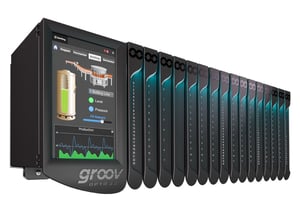
    White Paper: Meet the Future: Edge Programmable Industrial ControllersWe’ve recently published a new white paper that explains why and how Edge Programmable Industrial Controllers (EPICs) are the solution for today’s–and tomorrow’s–automation applications.

    For today’s controls engineers, new demands to use and share data present three main challenges: security, complexity, and expense.

    These IIoT or data-intensive automation applications typically require many steps and a lot of middleware: hardware, drivers, parsers, and custom software. Time-consuming to set up, difficult to maintain and change, they also open major security concerns.Read the white paper to learn how Edge Programmable Industrial Controllers (EPICs):

    • Eliminate middleware and reduce the steps needed to get data
    • Securely share data with software, equipment, control systems, building management systems, databases, cloud services and more
    • Provide several programming options in one unified platform
    • Simplify commissioning and troubleshooting
    • Solve IIoT challenges for OEMs and manufacturers

    DOWNLOAD WHITE PAPER

    More about EPICs

    Opto 22's groov EPIC systemYou can learn more about Opto 22’s own EPIC, the groov EPIC system, by reviewing these website resources:

    Or contact our pre-sales engineering team today to discuss what problems an EPIC can solve for you.


    Topics: OEMIIoTIndustrial Internet of ThingsEPICgroov EPICwhite paper

  • APG INTRODUCES THE NEW SERIES FS-500 STAINLESS STEEL HORIZONTAL FLOAT SWITCHES

    APG INTRODUCES THE NEW SERIES FS-500 STAINLESS STEEL HORIZONTAL FLOAT SWITCHES

    APG's New Series FS-500 Stainless Steel Horizontal Float Switches

    LOGAN, UT – Automation Products Group, Inc. (APG) introduces the new Series FS-500 Stainless Steel Horizontal Float Switch.

    Series FS-500 are durable, versatile float switches with a wide range of usage and applications. Three fitting configurations and two temperature ranges—all carrying CSA approvals—make the Series FS-500 an easy choice for OEM, water and wastewater, chemical, and specialty food equipment applications. Series FS-500 switches are rated for 100 W at both Standard Temperature (up to 368° F / 187° C) and High Temperature (500° F / 260° C) ranges. With their compact size, stainless steel wetted materials, and reversible switch orientation, FS-500 switches are go-anywhere, use-everywhere horizontal float switches

    Features of the Series FS-500 include:

    • 316L Stainless Steel wetted materials
    • Mounting Options: ½” – ½” NPTM; ½” – ¼” NPTM; Bulkhead with ½ – 13 threads
    • Standard Temperature Range: -40° – 368° F (-40° – 187° C), up to 300 psi
    • High Temperature Range: -40° – 500° F (-40° – 260° C), up to 300 psi
    • Max Capacity: 100 W (resistive load only)
    • Voltage rating: up to 120 VDC, 240 VAC

    CSA Approvals for the Series FS-500 include:

    • Explosion Proof for Standard Temperature ½” – ½” and ½” – ¼” NPTM mountings
    • General Use for all Bulkhead mountings and all High Temperature models
    • Single Seal for all models

    About Automation Products Group
    Automation Products Group, Inc. (APG) is a supplier of innovative and differentiated products, solutions, and services for industrial process measurement and control. Technologies include pressure, flow, level control, analytics, and dedicated flexible control, using state of the art methodologies. Our customers include OEM’s, integrators, distributors and end users. APG’s goal is to provide reliable products and solutions supported with exceptional customer service.

    Media Contact: APG Sales, sales@apgsensors.com, 1-888-525-7300

  • Safety Tool Box: Who Has the Right-of-Way?

    According to driving statistics in the USA last year, there were nearly 4,000 fatal motor vehicle accidents that involved a driver failing to yield the right-of-way. And while many of those accidents were due to driver distraction, (which means one or both drivers weren’t even aware of a pending right-of-way situation), many right-of-way accidents also involved drivers who were either driving too aggressively, driving too fast, or were too just bullheaded to follow the law and give up the right-of-way.


    To read the full article, click here.

    Download this information:

  • APG: Are Magnetostrictive Probes the Solution You’ve Been Looking For?

    APG: Are Magnetostrictive Probes the Solution You’ve Been Looking For?

    Often times when our customers see magnetostrictive level transmitters, they immediately think of the oil and gas industry. While APG’s magnetostrictive probes are highly used throughout the oil and gas industry, they are utilized throughout several industries including chemical, petrochemical, water and wastewater, pharmaceutical and transportation to name a few. Magnetostrictive probes are typically selected in applications due to the sensor’s accuracy. The probe can accurately report the levels of a liquid to within 0.04 inches (1.00 mm).

    NEW BLOG – THE BASICS OF MAGNETOSTRICTIVE LEVEL TRANSMITTERS

    Learn why APG’s Magnetostrictive Level Transmitters may be the unexpected solution you are looking for in our new blog The Basics of Magnetostrictive Level Transmitters. In this blog, we provide an overview of industrial liquid level sensors, cover how magnetostrictive level transmitters work, explore the advantages magnetostrictive level probes, and delve into applications the sensors are used in.

    WANT TO LEARN MORE ABOUT MAGNETOSTRICTIVE SENSORS?

    Sign up for APG’s free webinar event Wednesday, August 12th 9:00 am MT where we will be teaching the working principles behind magnetostrictive level transmitters.

    SHOP MAGNETOSTRICTIVE LEVEL TRANSMITTERS

    APG manufactures three series of magnetostrictive level transmitters: explosion proof series, intrinsically safe series, and API 18.2 compliant series. Each series is available in a variety of models that offer different stem types and materials, as well as different float types and materials. Check out the different options by clicking the button below.
  • APG INTRODUCES INTRINSICALLY SAFE MODBUS DISPLAY AND LEVEL PROBES

    APG INTRODUCES INTRINSICALLY SAFE MODBUS DISPLAY AND LEVEL PROBES

    LOGAN, UT – Automation Products Group, Inc. (APG) introduces a new self-contained measurement and control solution featuring the new Series MDI Intrinsically Safe Modbus Display and new Series MPI Intrinsically Safe Magnetostrictive Level Probes.

    MPI & MDI connection

    Developed in tandem with each other, the MDI modbus display and the MPI level probe are designed to work together, creating a stand-alone, self-contained measurement and control solution for Class I hazardous locations. The battery-powered MDI display is not only rated for installation in Class I, Zone 1 areas, is it also rated to power a single Intrinsically Safe device installed in Class I, Zone 1 or 0 areas without the need for complex IS barriers or explosion-proof conduit. Similarly, a single MPI probe can be installed in a Class I, Division 1 or Class I, Zone 0 location and connected directly to an MDI display. For stand-alone measurement-and-display in Hazardous Locations, an MDI and MPI greatly simplify both the amount of equipment needed and the installation procedures.

    For more complicated scenarios, an MDI display with an auxiliary connection can be used with a passive monitoring system to provide system-wide access to the readings from the MPI probe. While a barrier is not required between the MDI display and MPI probe, an Intrinsically Safe barrier is required between the MDI display and the external monitoring system. The external system can only passively read the MDI display. However, the external system can be set to provide a “Wake Up” input to the MDI display, preserving the life of the battery powering both the MDI display and the MPI probe.

    Already known for Explosion-proof Magnetostrictive Level Probes, APG is expanding its offerings to include Intrinsically Safe magnetostrictive level probes. Available across all the same stem types as the Explosion-proof probes, the MPI probes provide the precision output and control parameters of Modbus with the installation ease of Intrinsically Safe devices.

    MDI Intrinsically Safe Modbus Display

    Features of the Series MDI Intrinsically Safe Modbus Display include:

    • Environmentally sealed, IP66-rated 3” or 4” aluminum housing
    • Configurable two-line display with battery power indicator
    • Operating Temperature Range: -22° – 185° F (-30° – 85° C)
    • Optional auxiliary connection for passive external monitoring
    • Software-based switchable power for controlled sensor

    CSA, ATEX, and IECEx Approvals for the MDI include:

    • Class I, Zone 1 Installation
    • Control of sensor in Class I, Zone 0 or Class I, Zone 1 area

    Series MPI Intrinsically Safe Magnetostrictive Level Probe

    Features of the Series MPI Intrinsically Safe Magnetostrictive Level Probes include:

    • Five stem material/diameter choices:
      • stainless steel: 1/2” (MPI-E), 1” (MPI-R), and 7/8” flexible mesh (MPI-F)
      • coated stainless steel: 1/2” (MPI-E Chem)
      • titanium: 1” (MPI-T)
    • Stem length up to 25’ (7.62 m) for R, F, and T stems
    • Operating Temperature Range: -40° – 185° F (-40° – 85° C)
    • Optional digital temperature sensors (up to 7) in probe stem
    • Configurable Modbus output
    • Can be powered by MDI battery

    CSA, ATEX, and IECEx Approvals for the MPI (all stems) include:

    • Class I, Division 1, Groups C, D
    • Class I, Zone 0

    EXPLORE THE COMPLETE SYSTEM

    About Automation Products Group
    Automation Products Group, Inc. (APG) is a supplier of innovative and differentiated products, solutions, and services for industrial process measurement and control. Technologies include pressure, flow, level control, analytics, and dedicated flexible control, using state of the art methodologies. Our customers include OEM’s, integrators, distributors and end users. APG’s goal is to provide reliable products and solutions supported with exceptional customer service.

    Media Contact: APG Sales, sales@apgsensors.com, 1-888-525-7300

  • DID YOU KNOW THAT APG’S PRODUCTS ARE MADE IN THE USA?

    DID YOU KNOW THAT APG’S PRODUCTS ARE MADE IN THE USA?

    That’s right! APG’s products are proudly produced in the USA at the company’s facility in Logan, UT. With very few exceptions, APG’s products are manufactured from start to finish in this facility. The following is a list of sensors that are manufactured from start to finish at the facility in Logan:

    Shop APG’s Products


    NEW BLOG:
    THE BASICS OF FLOAT SWITCHES

    What is a Float Switch?
    A float switch is a type of contact liquid level sensor that uses a float to operate a switch. Float switches are commonly used to control other devices such as alarms and pumps when a liquid level rises or falls to a specific point. While there are some mechanical float switches (similar to the float in a toilet tank that turns off the incoming water when the tank is “full”), this article will focus on electrical float switches, floats that are used to open and close (i.e., turn off and on) electrical circuits.
    Types of Float Switches
    There are two types of float switches: stem-mounted float switches and cable-suspended float switches.

    Stem-mounted Float Switches
    Stem-mounted float switches constrain the movement of the float to up-and-down along a stem, and operate on a one-float-one-level basis. Stem-mounted float switches can be as simple as a single-point switch with a single float on one stem or they can be complex multi-point switches with as many as seven floats on a single stem. Single-point float switches can be found in both vertical and horizontal orientations.

    Cable-suspended Float Switches
    Cable-suspended float switches, on the other hand, are as free as the cables they are attached to. If you don’t tether a cable-suspended float switch, it will go with the flow, as far as the cable allows! While cable-suspended float switches are all mechanically pretty equivalent (float and cable), they can be much more electrically diverse than stem-mounted float switches. Cable float switches can be simple, with a single point that controls a switch, or more complex, with up to four switch points and built-in hysteresis.
    How do Float Switches Work?
    Almost all electrical float switches work by using a magnet to open and close a reed switch.

    How Stem-mounted Float Switches Work
    Stem-mounted float switches use a magnet in a float that passes over the reed switch with the rising or falling action of the liquid, either opening or closing the switch. On horizontal stem-mounted float switches, the float rotates away from the reed switch on a hinged arm, rather than free-floating on a central stem.

    How Cable-suspended Float Switches Work
    Cable-suspended float switches have both the magnet and the reed switch located in the float. As the float rises and falls with the liquid level, the magnet moves closer to or further away from the reed switch, causing it to open or close. In both cases, the changing liquid level is translated to an electrical on-off signal by the movement of the magnet.

    Normally Open vs. Normally Closed Switches
    The trickiest part of float switches is figuring out whether a situation calls for a Normally Open or Normally Closed switch. “Normally” refers to the lowest position the float can be in where the float is not floating. “Open” means an open circuit, which is off. A “Closed” switch completes a circuit, turning it on. So, for any given application, think about whether you want rising or falling liquid level to trigger an action, and whether that action should be turning a circuit (think a pump, or an alarm) on or off. A normally open switch will turn OFF a circuit as liquid level falls. A normally closed switch will turn a circuit OFF as liquid level rises. For example, if you want your float switch to trigger a low-level alarm, you would use a normally closed switch. However, if you need to turn off an emptying pump when the level in a tank or reservoir gets too low, then you would use a normally open switch.

    It is important to know whether you need a normally open or normally closed float switch because most float switches come with the normally open or normally closed operation selected at the time of purchase. There are some single-point stem-mounted float switches that are user reversible.

    Float Switch Setup and Installation Best Practices
    Some float switches are “plug and play”, and most are fairly easy to install, but it’s worth taking a moment to go over some best practices for setting up and installing float switches.

    Continue Reading Blog Post

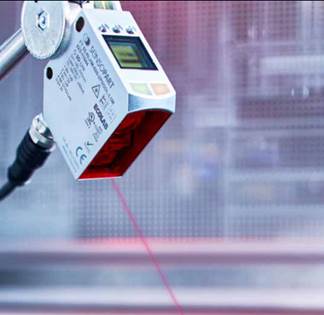
  • Sensopart: We are very excited to announce the release of our new ALL-PURPOSE LASER DISTANCE SENSOR – FT 55-RLHM!

    Sensopart: We are very excited to announce the release of our new ALL-PURPOSE LASER DISTANCE SENSOR – FT 55-RLHM!

    Highlights of the RLHM
    Long Range detection – robust detection even at ranges of 1 meter Able to detect the smallest objects – can detect objects as small as .1 mm! Multiple modes of detection to solve challenging applications Detect clear targets with our new “Detect All” Mode Intuitive LCD display Robust IP-69K metal housing Exceptional price-to-performance ratio And More! |
    How To videos listed below that will be followed by application-specific and how to demo assistance.
    https://www.youtube.com/watch?v=ag-gDQ5nvkI
    https://www.youtube.com/watch?v=E_SQzjLmPcY
    https://www.youtube.com/watch?v=xPbdfGwAqQg

    Download this information:

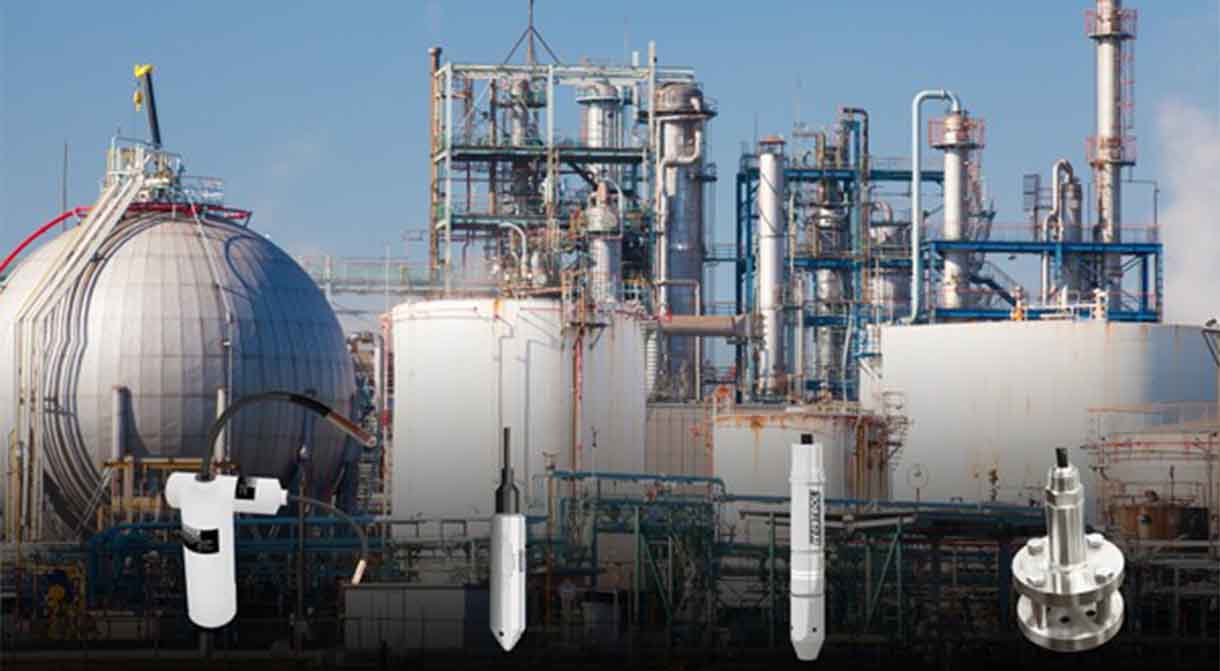
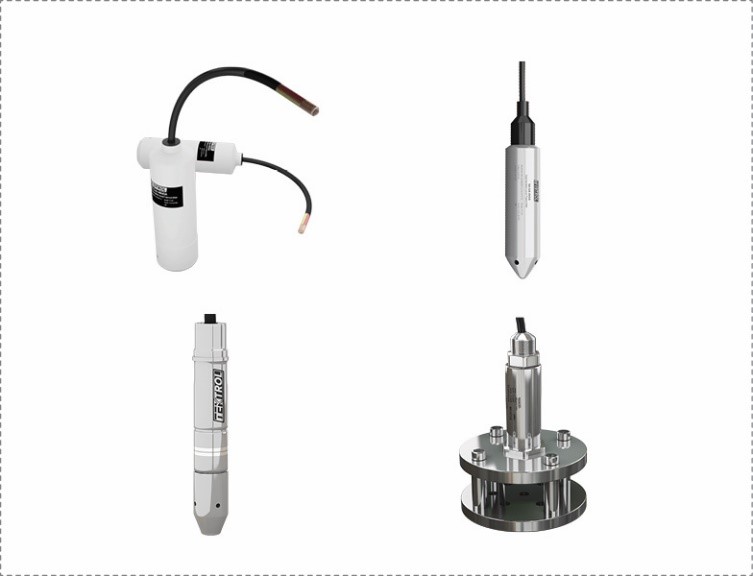
  • Tek-sub 4800 Series Submersible Level Transmitters Applications

    Tek-sub 4800 Series Submersible Level Transmitters Applications

    Tek-Sub 4800 Series of Transmitters are designed for high performance and precise level measurements. Piezoresistive sensor, stainless steel body, and waterproof cabling make these Submersible Level Transmitters suitable for long term accurate service. This high-performance real-time level measurement device is available with multiple output signal options, several level ranges, custom cable lengths, and materials.
    Water and Wastewater:
    Water level measurement in wells, borewells, ponds, reservoirs, weirs, and dams including ground water monitoring for muddy liquid and thick slurries level, etc
    Chemicals:
    Level measurement for Sulfuric acid, Fertilizer, brine, HCL, sodium hypochlorite, etc
  • Tek-Trol: Oil and Gas Separators!

    Tek-Trol: Oil and Gas Separators!

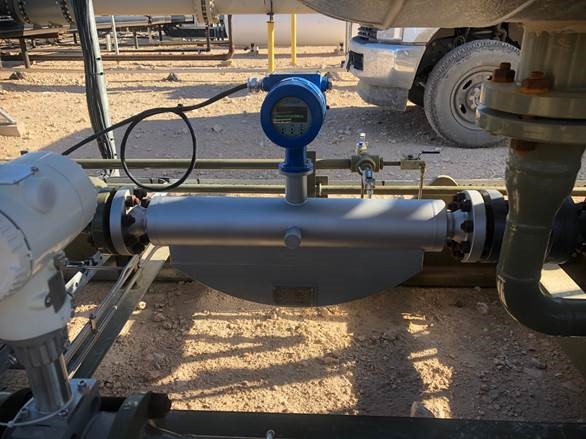
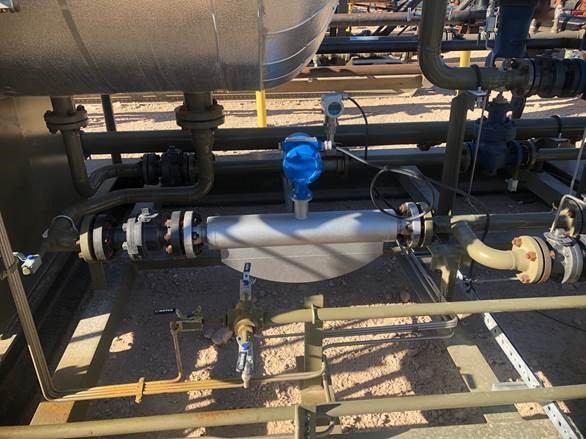
    Separators reside on onshore well pads and offshore platforms and can be horizontal, vertical, or a sphere. They’re used in upstream oil and gas applications for periodic well testing (as a test separator) or continuous production measurement (as a production separator), and can function in either two-phase or three-phase. The separator has one goal: separate the oil from the gas and water. But, if you choose the best flow measurement for your separator, you can really make it work to meet not only this goal but also deliver much more insight into your operation.

    Gas. In order for a separator to function, it requires a steady, maintained level of pressure in order to push the fluids out of the separator and into a tank. If the pressure’s too high, you can get gas entrained in the oil where it will simply vent off from the tank resulting in higher emissions and lost product. If the pressure’s too low, you can lose the more valuable, lighter, or intermediate gases (called natural gas liquids or NGLs) as they get pulled out into the natural gas. NGLs have a higher BTU content, and you’ll want to keep these valuable BTUs in liquid form. In some applications, the Gas Outflow serves as a Custody transfer point. If so, you’ll want to know how much gas each well is producing, and there are several flow measurement technologies that can help. The Tek-Cor 1100A Coriolis offers excellent accuracy for any custody transfer point is provided and can also deliver diagnostic information whether the separator is operating at peak efficiency.

    Oil. Like a quality check of the entire separator, the oil outflow flow point provides insight into how the well is performing and delivers an indication of reservoir decline rates. The oil outflow is critical as it’s used as an allocation measurement to calculate any royalties owed to the landowner. The Tek-Cor 1100A Coriolis is highly accurate, no parts that wear, and diagnostic insight ensure you don’t over – or underpay on critical royalty payments.

    Water. Produced water is a by-product of oil production and can provide an indication of where the reservoir is on the production decline curve. It can also serve as a simple indicator as to how often water tanks need to be emptied. In some oil fields, how much water is produced must be reported for regulatory reasons. The big advantage of a Tek-Cor Coriolis meter in this kind of application is as another quality checkpoint to determine if there is any oil in the water. It can measure the water cut (net oil) in two-phase separators.

    The Tek-Cor 1100A Coriolis can be used on all three phases to ensure accurate and reliable measurements.

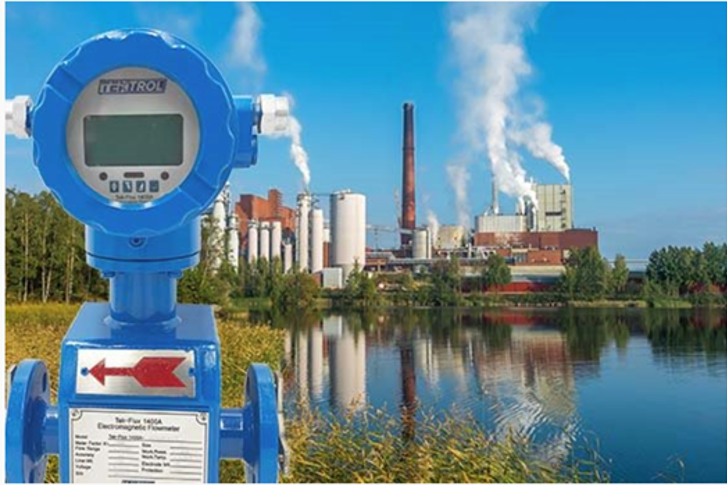
  • Tek-Trol: Pulp and Paper Production!

    Tek-Trol: Pulp and Paper Production!

    Tek-Trol 1400A Electromagnetic Flow Meters used to measure starch water at a Paper Plant in upstate New York.

    In paper production, it is crucial to measure various additives to ensure product quality. In a Paper Mill, liquid additives: such as powdered products diluted in water, dyes, bleaches, and liquids with low conductivity and / or high viscosity are used in various processes.

    The Tek-Trol 1400A series of Magnetic Flow Meters offer an economical choice in measuring Starch Water for you in a Paper Mill.

    Starch additives are used in recycled papers to increase the strength of the cardboard. The starch arrives at the mill in powder form with various particle sizes along with moisture content. This start is then stored in silos. Using a variable speed Auger, the starch is then mixed with water in a small tank and then pumped into the piping system for transportation to the cooking system. During this process, it is mandatory to maintain the correct water to starch balance as its a critical function within this process.